Thursday, August 18, 2005
Los Angeles panel gives pay increase a pass
Commission sends controversial agreement between DWP and electrical workers to the City Council
By David Zahniser
Copley News Service
The citizen commission that oversees the Department of Water and Power sent the Los Angeles City Council a controversial five-year pay package on Tuesday -- but only after its attorney told members they have no authority to weigh in on the salaries contained in the agreement.The DWP commission voted 3-1 to approve the agreement, but commissioners emphasized they were not endorsing the hotly contested plan, which provides raises ranging from 16 percent to 30 percent, depending on inflation.
"I think that we should move it forward but make it clearly articulated that we are very, very uncomfortable," said Commissioner Annie Cho, one of the four commissioners appointed by former Mayor James Hahn. Commissioner Gerard McCallum II questioned why the DWP panel has no ability to establish salaries or establish the length of the agreement -- which runs to Sept. 30, 2009. And he criticized the decision to tie the pact to inflation when fuel prices continue to rise.
"Here we're looking at gas prices going up to $3, and so we know today will not look like tomorrow," he went on. "Yet we're going with five years (of pay increases), with a different mayor, with a different commission." Two weeks ago, McCallum and his colleagues tried to postpone a vote so that the agreement could be decided by the new appointees of Mayor Antonio Villaraigosa, who defeated Hahn and has criticized the pay package. Tuesday's vote provided the latest twist in the debate over the pay agreement, which was reached between city negotiators and 8,000 utility workers represented by International Brotherhood of Electrical Workers Local 18. DWP General Manager Ron Deaton said the city charter gives only the City Council the power to establish salaries of DWP employees, not citizen commissioners. The agreement, which provides annual raises of at least 3.25 percent, has infuriated workers from other municipal unions who went without a raise last year in order to help the city through difficult financial times. The package also has drawn fire from neighborhood leaders, who had protested an 11 percent water rate hike carried out by the DWP last year.
Brian D'Arcy, who heads IBEW Local 18, did not respond to a request for comment. But hours after the panel voted, Mayor Antonio Villaraigosa said he did not know that the commission had been deemed powerless to weigh in on the salaries of its employees. "All I can tell you is that I was not aware of it until you just mentioned it," the mayor told reporters. "But the important thing right now is that the council has an opportunity to act on it, and once they do, I'll weigh in." Villaraigosa has criticized the magnitude of the agreement but has also said he fears that any attempt to change it would prompt complaints that the city had committed an unfair labor practice. The agreement has already been approved by the members of IBEW Local 18. Councilman Dennis Zine said he had not seen the agreement, even though the executive employee relations committee -- a panel he serves on -- discussed the DWP negotiations on June 13. The panel referred the matter to the full council, which on June 28 gave direction to the city's negotiators on how to proceed.
Asked if he gave the instructions allowing the DWP pay package to be crafted, Zine said: "I'd say there was a discussion. I can't go into detail because it was EERC, but there was a discussion. I'll leave it at that." But former Councilwoman Cindy Miscikowski, who attended the council's DWP salary discussions, said Deaton and City Administrative Officer Bill Fujioka were "as strong as they could be" in telling council members, during closed-door discussions, of the need to support the proposed deal.
Fujioka and Deaton both pointed out that the union had the power to walk out if the agreement was not approved, she said. "There was an indication that ... the threat potentially was real, that the council didn't have many options to keep the (DWP) running if that were to occur," she said. "In light of a very hot season and power outages starting to occur, they'd have us over a barrel."
Thursday, August 18, 2005


IBEW, Quest Keep Negotiating
Qwest, union keep discussion open
Tuesday, August 16th 2005
DENVER (AP) - Qwest Communications International Inc. and its biggest union agreed late Saturday to extend negotiations on a new labor contract for 25,000 employees in more than a dozen states, delaying a possible strike.
“Qwest and the union continue to bargain in good faith,” Qwest spokesman Bob Toevs said.
The union said progress had been made since the executive board of the Communications Workers of America authorized a strike earlier Saturday. Like Toevs, spokeswoman Candice Johnson declined to provide details.
“It focused attention on how important the issues are for our members,” Johnson said of the authorization.
Last week, workers overwhelmingly authorized a strike. A walkout would affect employees ranging from customer service representatives to technicians.
Union negotiators said in an e-mail Saturday to members that Qwest had backed away from increasing mandatory overtime, one of the major issues holding up a new contract. They said Qwest was sticking to health care and retirement plan proposals opposed by the union.
The contract between Qwest and CWA members in 13 mostly Western states was set to expire at midnight but the deal to keep talking means it remains in effect.
Qwest was negotiating separately with the International Brotherhood of Electrical Workers, a union representing about 300 workers in Montana whose contract also expired Saturday. A union recording said talks had been extended into early Sunday. Toevs has said Qwest could operate normally during a strike, with managers taking on the bulk of the tasks.
Negotiators said Qwest had offered a wage proposal conditioned on changes in health care plans for retirees and active employees, including increases in deductibles and copays.
The company said retirees and active employees — who have never had to pay a monthly health insurance premium — could retain their current health care plan if they agree to pay a monthly premium, the union said. In 2003, the CWA and the IBEW representing Montana employees approved a contract with two bonuses instead of a salary hike in part because of the company’s problems at the time — $20 billion in debt, stagnant revenue and government probes of financial statements.
The company is working to reduce its current debt of about $17 billion after losing out this year in a bidding war for MCI Inc. to Verizon Communications Inc.
Qwest provides local phone service and other communications services in Arizona, Colorado, Idaho, Iowa, Minnesota, Montana, Nebraska, New Mexico, North Dakota, Oregon, South Dakota, Utah, Washington and Wyoming.
Tuesday, August 16th 2005
DENVER (AP) - Qwest Communications International Inc. and its biggest union agreed late Saturday to extend negotiations on a new labor contract for 25,000 employees in more than a dozen states, delaying a possible strike.
“Qwest and the union continue to bargain in good faith,” Qwest spokesman Bob Toevs said.
The union said progress had been made since the executive board of the Communications Workers of America authorized a strike earlier Saturday. Like Toevs, spokeswoman Candice Johnson declined to provide details.
“It focused attention on how important the issues are for our members,” Johnson said of the authorization.
Last week, workers overwhelmingly authorized a strike. A walkout would affect employees ranging from customer service representatives to technicians.
Union negotiators said in an e-mail Saturday to members that Qwest had backed away from increasing mandatory overtime, one of the major issues holding up a new contract. They said Qwest was sticking to health care and retirement plan proposals opposed by the union.
The contract between Qwest and CWA members in 13 mostly Western states was set to expire at midnight but the deal to keep talking means it remains in effect.
Qwest was negotiating separately with the International Brotherhood of Electrical Workers, a union representing about 300 workers in Montana whose contract also expired Saturday. A union recording said talks had been extended into early Sunday. Toevs has said Qwest could operate normally during a strike, with managers taking on the bulk of the tasks.
Negotiators said Qwest had offered a wage proposal conditioned on changes in health care plans for retirees and active employees, including increases in deductibles and copays.
The company said retirees and active employees — who have never had to pay a monthly health insurance premium — could retain their current health care plan if they agree to pay a monthly premium, the union said. In 2003, the CWA and the IBEW representing Montana employees approved a contract with two bonuses instead of a salary hike in part because of the company’s problems at the time — $20 billion in debt, stagnant revenue and government probes of financial statements.
The company is working to reduce its current debt of about $17 billion after losing out this year in a bidding war for MCI Inc. to Verizon Communications Inc.
Qwest provides local phone service and other communications services in Arizona, Colorado, Idaho, Iowa, Minnesota, Montana, Nebraska, New Mexico, North Dakota, Oregon, South Dakota, Utah, Washington and Wyoming.
IBEW Sues To Protect Pension Assets in Takeover
Neiman Marcus shareholders approve $5.1 billion sale
Shareholders of Neiman Marcus Group on Tuesday approved the company's sale to two private equity firms for $5.1 billion.
The Texas Pacific Group in Fort Worth and Warburg Pincus LLC in New York agreed to buy the Dallas-based luxury retailer in May.
Under the terms of the merger agreement, Neiman Marcus (NYSE: NMGA, NMGB) shareholders will receive $100 a share. The merger is expected to be completed during the last calendar quarter of 2005.
The company operates 35 Neiman Marcus stores in the country, including its first location in San Antonio at The Shops at La Cantera, opening in September.
A lawsuit brought by a union pension fund after Neiman Marcus announced the deal is still pending in a Dallas federal court, however. The complaint from the NECA-IBEW Pension Fund argues that the deal doesn't give enough value to it and other Neiman Marcus shareholders.
Texas Pacific has more than $20 billion under management and often takes control of the companies in which it invests. Its investments include Petco, J.Crew, Burger King and America West. The company also has offices in San Francisco and London.
Warburg Pincus has about $13 billion under management and invests in a range of industries including real estate, health care, media and business services.
Geaorge Meany Campus, National Labor College, Offers Education for Tomorrow's Leaders Today

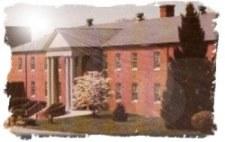
The National Labor College
George Meany Campus
10000 New Hampshire Avenue
Silver Spring, MD 20903
Phone: (301) 431-6400
Toll Free: 1-800-GMC-4CDP
Fax: (301) 431-5411
The National Labor College (NLC) is located on a beautiful 47-acre campus in Silver Spring, Maryland. It began with the vision of George Meany that labor have its own college - a national center that would provide continuous labor education for all union activists.
At NLC you can take classes that enable you to be an integral part of building your union; those same union-building classes can start you on the path to finishing the bachelor’s degree you have always yearned for.
Continuing Union Education Programs
During the 2005-2006 academic year, NLC will offer more than seventy week-long labor education classes in areas such as arbitration, organizing, negotiations, safety & health, union building and leadership development. Specialized certificates are available.
Undergraduate and Graduate Programs
NLC offers a Bachelor of Arts degree with majors in various areas of labor studies and a Bachelor of Technical/Professional Studies degree. Masters degree programs in Public Administration and Legal and Ethical Studies are delivered by the University of Baltimore at the NLC George Meany campus. There are also other graduate degree opportunities.
For More Information:
Seven IBEW Members GRaduate from National Labor College

Seven IBEW Members Graduate from
National Labor College
August 2, 2005
The National Labor College, which held graduation ceremonies on June 25 in Silver Spring, Maryland, is a center for lifelong learning. There's no better expression of that term than Ilene Ferrell, Portland, Oregon Local 48, one of seven IBEW 2005 graduates.
After finishing her inside wireman apprenticeship in 2001, Ferrell immediately applied to the college, graduating with a bachelor's degree in labor studies in 2003. Before the ink was dry on her diploma, she applied for the college's masters program. On June 25, Ferrell was awarded a master's degree in public administration.
Describing herself as someone who "steps up" when her local needs help, Ferrell has helped organize local picnics and serves as chair of the Local 48 Women's Committee, where her husband, Mike Evans, serves as vice president. She is a delegate to the Clark, Skamania, West Klickitat Central Labor Council and a delegate to the Washington State Labor Council Women's Committee.
Four years ago, the IBEW Journal featured a story on Ferrell's accomplishments as chair of the Apprentice Mentoring Committee at the NECA-IBEW Electrical Training Center in Portland.
Ferrell says that having a formal education is a great way for rank and file members to step into professional positions at the local and national level of unions, where they are needed. Many unions, she says, have to fill positions with people unfamiliar with the principles of unionism. "Our unity reflects our strength," she says, "and education is a direct component to building our strength."
Chuck Borell, business representative, Syracuse, New York Local 97, received his bachelor's degree in labor studies. Borell, who had attended Cornell University's School of Industrial and Labor Relations, applied his credits to NLC, beginning course work in 2003.
"I think that improving my writing techniques was the best benefit of the NLC program," says Borell. His senior paper investigated how unions can be more successful in labor arbitration. Borell sent detailed questionnaires to 100 arbitrators and received responses from 74.
Vair Clendenning, International Representative for the First District from Edmonton, Alberta, a graduate in labor education, said the most valuable part of his experience was the interaction with other students from different unions across North America and the Caribbean. He graduated with a bachelor's degree in labor education.
Clendenning travels across a wide section of Canada and into Minnesota in his service to the Brotherhood. The college's program of single weeks-in-residence, followed by six months of work at home, communicating with instructors by e-mail, is very suitable to his life on the road, he says.
Underscoring NLC's commitment to labor's future, Clendenning's senior paper was entitled, IBEW Canada-Organize for Survival. He encourages National Labor College alumni to volunteer to set up tables at IBEW district progress meetings to help recruit new students.
Anthony Griffin, a member of Chicago Local 134 and instructor at the IBEW-NECA Technical Institute says: "I have become more complete as a union member and activist," by attending NLC. The graduate in labor studies, counts "improving my understanding of labor structure and the labor movement" among his accomplishments.
Griffin based his senior project upon the 2004 Presidential election. He considered how union members choose political parties. While a majority of members he surveyed voted for Democratic nominee John Kerry, the majority of all members surveyed said that they would also give serious consideration to a third party candidate should one come forward who represents their views.
Joey A. Govea, also a member of Local 134, a graduate in labor studies, an apprentice instructor and member of the local's examining board, relished meeting other trades people from around the country in Silver Spring. His senior project considered how the union can bridge the gap between members who served in the apprenticeship program and those who are recruited through organizing. He surveyed and interviewed organizers from the local union, the director of the apprenticeship program and journeymen and apprentices.
Robert Raesch, a member of Washington, D.C. IBEW Local 26, a graduate in political economy of labor, says, "From waking up old brain cells to begin learning again; to understanding what organized labor stands for -- workers' rights, human rights...I wish I did this thirty years ago."
Raesch, who delivered remarks on graduation day as the senior class representative, was profiled in a lengthy story about the NLC in the Washington Post last June.
After working 30 years as an inside wireman, Raesch suffered a back injury. Raesch, whose wife, Pat, is a legislative analyst at the IBEW International office, now works part-time as a researcher for the Union Label and Service Trades Department, AFL-CIO.
Urging other members to attend NLC, Raesch says, "With one's life experiences and the hard work at NLC, the labor education will become a testimony to our children, to the young workers and seasoned workers alike -- that it is never too late to go back to school and get a degree."
Pete Cunningham, Chicago Local 134, a graduate in labor studies, won a distinguished paper award for his senior project about the IBEW System Council T-4's 1968 strike against Illinois Bell Telephone.
An electrical inspector with the City of Chicago, Cunningham began attending labor courses at the University of Illinois at Chicago in September of 2000.
First established by the AFL-CIO in 1974 on a 47- acre site, the George Meany Center for Labor Studies offered a Bachelor’s Degree in Labor Studies from the early 1970's in association with Antioch College.
In the mid 1990s, the AFL-CIO approved the establishment of an independent labor college. The NLC was founded in 1997. In 2004, the college achieved full accreditation by the Middle States Commission on Higher Education, an independent, regional accrediting body recognized by the U.S. Department of Education. The college offers bachelor's degrees in eight major areas and over 70 intensive, week-long continuing education programs.
Students from dozens of AFL-CIO unions attend one -week sessions on campus, followed by six months of home study, communicating with instructors and other students over the Internet. The college awards credits for "experiential learning," which students acquire on the job, in apprenticeship training, in community activity and businesses or in their locals. (www.georgemeany.org).
IBEW Local 2286 (Beaumont TX) Signs up Baton Rouge Nuclear Workers
Baton Rouge Plant Workers Vote IBEW
August 8, 2005
Two white-collar units at a nuclear power plant in Baton Rouge, Louisiana, voted overwhelmingly to become part of IBEW Local 2286 in May, edging the plant closer to wall-to-wall representation.
Eighty percent of the eligible workers in the purchasing department at the Riverbend nuclear plant voted for the IBEW, and 70 percent of the workers in the planning group did the same. In all, the Beaumont, Texas-based local added 18 new members, said Business Manager Randy Albin. Local 2286 already counts 230 members among the facility’s employees working in operations, maintenance, electrical, radiation protection, chemistry, warehouse and drafting.
The two new units were concerned about schedules and overtime, health insurance benefits and respect on the job. Albin said many of the new units were former IBEW members from other parts of the plant.
"Some of these people come out of mechanical and trusted the union more," Albin said.
Albin said he sees big opportunities for unions to make organizing inroads at a time when companies are cutting health benefits and pensions. "To have something in writing and the chance to negotiate benefits, why would you vote against yourself?"
But 84 people in an engineering unit at Riverbend, the last eligible unit in the plant, declined to vote for the local in late July. Albin said he plans to re-approach the engineers in a year.
IBEW Local 387 (Phoenix AZ) Starts Negotiations with Navajo Tribe
IBEW Begins Navajo Bargaining
for Utility Workers
for Utility Workers
August 9, 2005
The Navajo tribe has recognized Phoenix Local 387 as the bargaining agent for the 100 Navajo Tribal Utility Authority electrical workers on the sprawling Indian reservation that spans three states. Now the real work begins.
Organizer Bruce Osborne said it has taken two years to get to this point, but "the hard part is getting that first contract." Local 387 is submitting a proposed contract to the utility this week, and hopes to set dates for bargaining soon. Osborne, who has heard the utility has hired union-busting consultants, said no other union has ever represented the workers, to his knowledge.
"We have had casual contact there over the years but we have never been able to get to this point," he said.
If the local is successful in bargaining the contract, it could go after 300 more workers at the utility, which delivers electricity, gas and sewer services to residents of the Navajo nation on 25,000 square miles in Arizona, New Mexico and Utah.
Safety is a huge issue for the linemen, dispatchers, substation maintenance technicians, heavy equipment operators, instrument repair personnel and warehouse staff. Two years ago, an apprentice lineman climbing a pole made contact with a 14,400 volt line. He died immediately.
While the utility’s apprenticeship program turns out skilled linemen, the utility lacks many safety rules, Osborne said. "They send apprentices out on trouble calls without supervision," he said. "Workplace safety is a major issue."
Wages are also well below the industry average. Apprentices start at $19 per hour; foremen make $24 hourly. In a region plagued by a 45-percent unemployment rate and grinding poverty, the wage is not considered bad.
But the low wages contribute to high turnover. At least 29 Navajo utility-trained workers have left for more money off the reservation following the four-year apprentice program.
"They’re good linemen," Osborne said. "If we get them a union contract and improve safety, there’s no reason for them to leave home."
Language and sheer distance on the Indian reservation presented several challenges for organizers. Osborne, who spent months on the road collecting 79 signature cards, said he was often accompanied by Navajo workers employed at the IBEW-represented Four Corners Power Plant in northern New Mexico. They came in handy, particularly when the NTUA workers spoke only Navajo. The language is so difficult that in World War II, American military radio dispatches cloaked their messages in a code based on the language. Japanese forces intercepting those messages were never able to break the code of the so-called "code talkers."

IBEW Local 387 (Phoenix AZ) Signs up workers at AZ Powerplant
IBEW Picks Up Arizona Power Plant
August 2, 2005
More than 10 workers at a power plant southeast of Phoenix will be represented by Local 387 following the Arizona Public Service Company’s voluntary recognition of the union.
Local 387 Business Manager Bob DeSpain said the local already represents approximately 2,000 workers at the utility, whose service area covers Arizona and parts of New Mexico.
In March, when the company informed DeSpain it was acquiring the Pinal County gas-fired turbine facility from Pennsylvania-based PPL, he expressed interest in organizing the unit. Plant workers and the company agreed.
"We have a pretty good working relationship with the company," DeSpain said. "It worked out well."
The 450-megawatt Sundance power plant operates primarily during periods of high energy demand.
IBEW Local Union 387 Web site
Subscribe to:
Posts (Atom)